
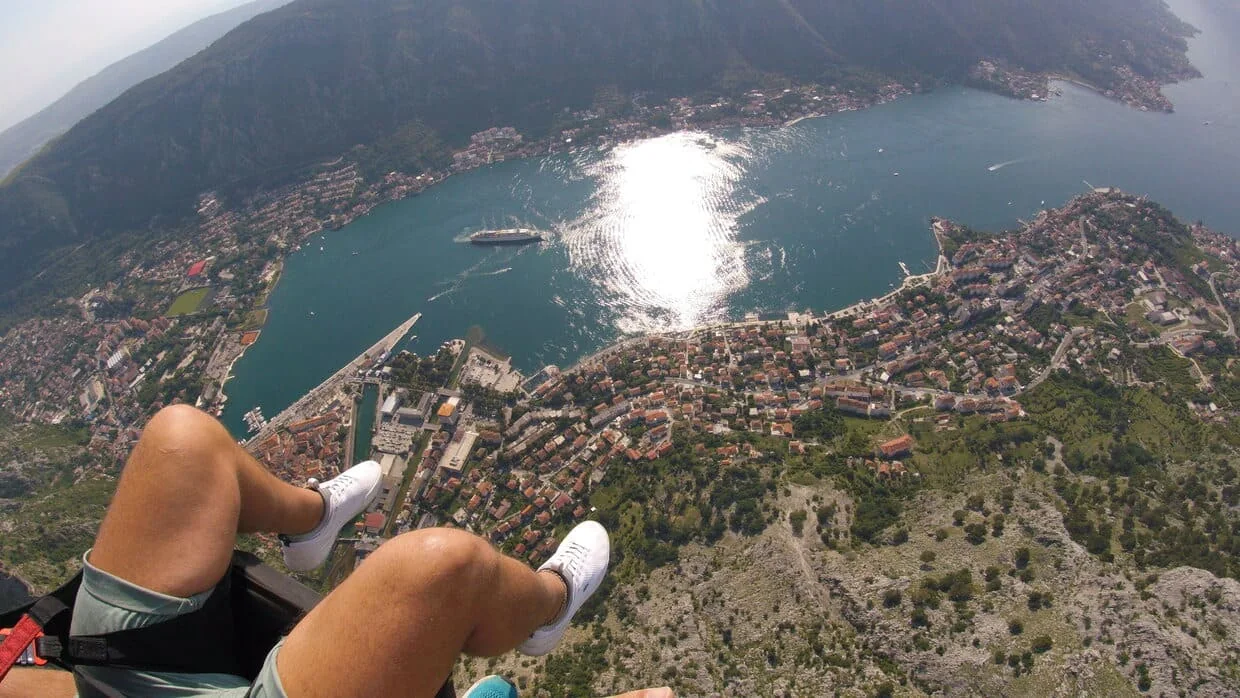
From mountain takeoff to Kotor below
These photographs show different parts of the Kotor flying area: the mountain slope, the wide Bay, the fortress and the Old Town. They illustrate changing perspectives, not one continuous flight.
Each image offers one detail to look for: the steep slope after takeoff, the shape of the Bay, the fortress ridge or the passenger’s seated position. The flight line and landing plan can be different on your day.
Find the high view first
In the high photographs, look at how small the shoreline settlements appear beside the mountain walls. The water helps show the scale of the landscape. These are the images to open when you want to understand the Bay’s shape from the air.
Locate the fortress and Old Town
Find the fortress walls on the slope, then follow them towards the roofs of Kotor Old Town. In the lower photographs, the marina and waterfront are easier to recognise. The views guide explains why these landmarks fit so closely together.
What tandem feels like visually
You sit in the front harness with the pilot behind you. After takeoff there is no need to keep running or hold yourself up; you settle into a seated flying position.
The passenger photographs in this gallery are useful for that reason: they show the actual body position once the takeoff is over.
The lower part of the route
Near the lower approach, Kotor Old Town and the marina can sit almost directly beneath the flight. The bay shore becomes the dominant reference instead of the wider mountain panorama.
Landing details can change with the day, so the final images are best read as lower-route orientation rather than a fixed landing promise.
Your own day will look different
Light changes the Bay a lot. Clear sun, haze, cloud shadow and the season can make the same route look very different.
That variation is normal. The geography stays Kotor; the exact colour, visibility, height and route line belong to the conditions of your own flight.